

Desks of Creatives: 5 Aesthetic Desk Ideas That Make Room to Reset
The best creative spaces rarely look like showroom displays. They collect evidence of the work happening there: an open notebook, a favorite pen within reach, sketches waiting for another look, or a small object that makes the space feel personal.
The objects that stay close are usually the ones that earn their place through everyday use. A creative space gradually grows into a place that supports the work happening there.
Beautiful design supports the way you naturally work while leaving room for small moments away from a screen-heavy day.
What Makes a Desk Feel Calmer and More Personal?
A desk feels calmer and more personal when it reflects the work and the person doing it. An open surface, good light, natural materials, and a few meaningful objects can make the space easier to use and enjoy.
Choose objects with purpose and give each one a place that feels intuitive.
The space grows with the work itself. No one builds it the same way. Small changes are often what make the desk your own.
5 Aesthetic Desk Ideas That Make Room to Reset
1. Design Around the Work

Great creative desks are built around the work they support. A writer's workspace looks different from a designer's, just as an editor’s tools will differ from an illustrator's. Every desk develops its own rhythm based on what's used most often.
A writer reaches for a notebook. Someone planning projects keeps notes and calendars within easy reach. Sketches spread across an illustrator's work surface, while a designer may keep samples and reference materials close by. A maker leaves room for the tools that move in and out of each project.
Each creative discipline relies on a unique collection of tools. Those tools earn their place by supporting the work at hand. Make room for the work first, then arrange everything else around it. An open surface gives you space to spread out a project, jot down ideas, or move materials without constantly clearing the desk.
2. Reduce Visual Friction

A creative desk works best when it’s easy to use. Cables, scattered tools, and too many objects competing for attention can make a work surface feel busier than it needs to.
Give everyday items a place of their own. Have one charging area for everyday devices. Keep tools within reach. Organize materials so they're easy to find. Choose a few decorative items that complement the workspace.
A clear work area leaves more room for ideas and makes it easier to begin the next project.
3. Bring in Natural Materials

The materials surrounding a workspace shape its overall feel just as much as its layout. Many creative spaces change with the seasons, from fresh flowers in spring to warmer lighting in winter. Small updates keep the space feeling fresh without changing its purpose.
Wood grain softens a desk filled with glass screens. Stone brings depth. A ceramic mug catches morning light differently than a plastic accessory. A plant softens the edges. Linen and lighting make the space feel lived in and welcoming.
These subtle details shape a balanced and inviting workspace. For those who spend much of the day in front of a screen, organic materials offer a welcome contrast to glass, plastic, and technology without distracting from the work itself.
Gradually, these materials become part of the workspace. They bring character and familiarity until they feel like they belong. Details such as variations in wood grain and handmade ceramics remind us that no two spaces develop in the same way.
4. Include One Object That Invites Touch

Some desk objects invite interaction through texture and movement. When you change a pattern by hand, the object can offer a brief pause between creative tasks.
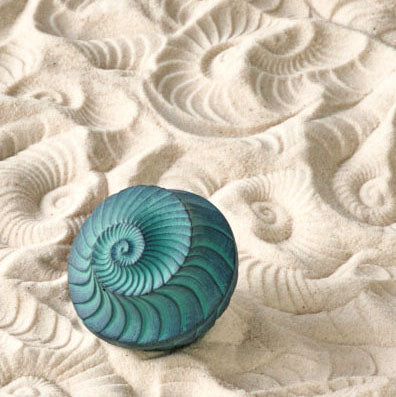
A Wonderscape is a handmade tabletop sand garden with a wooden tray, fine sand, and concrete forms you can roll, press, or trace through the sand. It can serve as a small screen-free activity between projects. Smoothing the sand or creating a new pattern can become part of a personal routine that marks the end of one task before beginning the next.
The most meaningful objects become the ones you reach for again and again. They're the ones that effortlessly become part of the rhythm of creating.
5. Make It Easy to Reset
Creative work often carries over into another day. Leaving your desk ready for tomorrow makes it easier to settle back in and continue where you left off.
At the end of the day, take a moment to reset the space. Put away loose tools, close your notebook, smooth the sand in a Wonderscape, and leave tomorrow's first task waiting for you. These small rituals create a natural ending to the day while preparing the space for whatever comes next.
Where a Wonderscape Fits on a Creative Desk

A Wonderscape rests naturally beside an open notebook or near a favorite lamp, within easy reach of the items you use every day. It works alongside sketchbooks, pens, and other creative materials, becoming part of your creative routine. Its compact footprint helps maintain an open work surface.
Invented by artist Andrew Lonnquist, Wonderscapes are Olander’s original tactile sand gardens, made by hand in Portland. Each one combines a finished wooden tray, fine sand, and concrete Sand Spheres based on Andrew’s original hand-carved patterns. The wood, sand, and concrete add texture, weight, and movement while creating a hands-on alternative to another screen.
A Wonderscape can sit alongside the creative tools already close at hand. The result is a personal place, lived in and carefully arranged.
A Desk That Reflects the Work
Every creative practice develops in its own way. The spaces where that work happens evolve alongside it, shaped by thoughtful choices and everyday routines.
The best additions become quiet companions to the work, offering a familiar place to pause before the next idea takes shape.
Explore the Olander Wonderscapes collection to see how a handcrafted tabletop sand garden can become part of your creative workspace.