

Kinetic Sand vs. Sand Spheres vs. Zen Garden Sand: Which Might Suit You Best for Stress Relief?
The Right Sand Depends on How You Like to Play and Interact
Sand may seem like a simple material until you start exploring what you can do with it. Kinetic sand can be squeezed and molded between your fingers. A desktop Zen garden gives you a surface for raking deliberate lines. Roll a Sand Sphere through loose grains and a new pattern begins to take shape.
These differences matter to adults who are curious about sensory sand. The material and tools determine much of what happens once you begin.
Think first about what sounds satisfying. You might enjoy molding with your hands, carefully raking a surface, or following the path of a rolling sphere. Knowing how each option behaves makes choosing considerably easier.
Sand Play & Sensory Sand Therapy
Sand play starts with something remarkably simple: touching and moving sand. Loose grains can run through your fingers or shift beneath a tool. Cohesive varieties hold their form when pressed, opening up possibilities for molding and sculpting.
Trained professionals also use sand in structured therapeutic settings. At home, adults can explore sensory sand through activities such as raking a tabletop garden or reshaping a handful of kinetic sand.
The activity can be simple. Working with a physical material gives your attention somewhere tangible to land during a screen-heavy day.
Uses for Sand in Sand Play & Self-Guided Therapy
The sand itself provides tactile feedback as the grains move across your fingers. Tools bring another dimension to the surface and expand the ways you can interact with it.
Each approach offers its own kind of engagement. Kinetic sand gives your hands plenty of tactile feedback as you squeeze and mold it. Raking a Zen garden brings order to the surface one line at a time, which can feel especially welcome when the day around you feels anything but orderly. Sand Spheres leave more room for creativity, with each movement changing the design as you go.
The question becomes: what do you actually enjoy doing?
Shaping and Molding With Sand
Kinetic sand is made for shaping. Its grains cling together, allowing you to press the material into a form, pull it apart, and start over without adding water.
That cohesive quality is a big part of its appeal. You can squeeze it between your fingers or build small forms with very little preparation. A small amount can live on a desk. Larger trays leave more room to sculpt at home.
Each formula varies in firmness and grain size. For anyone who enjoys squeezing, pressing, and reshaping, the way kinetic sand holds together gives the activity its character.
Its strength in molding also shapes its limitations. The grains hold together, so kinetic sand isn't as well suited to the fine rake lines or freely flowing trails you can make with loose sand.
Desktop Sand Zen Gardens
A desktop Zen garden uses loose sand as a surface for deliberate raking. A small rake draws lines, curves, and other arrangements that remain visible until the surface is smoothed again.
Fine grains are particularly useful here because they capture the rake's detail. Each pass becomes visible across the tray.
There’s an orderly quality to the process. You decide where the rake goes and watch the design develop one line at a time. People drawn to repetition and organization may find that structure especially satisfying.
Using Sand Spheres & Creating a Wonderscape

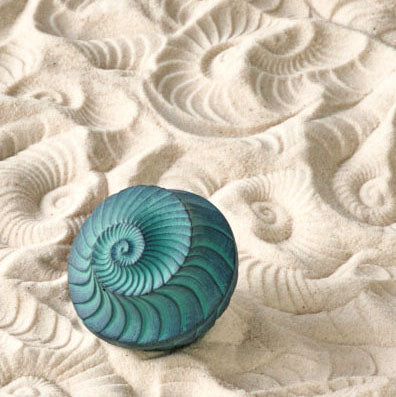
Sand Spheres create patterns through rolling movement. Guide one across loose grains and its path remains behind. Direction and pressure influence the marks that develop along the way.
Olander Earthworks creates Sand Spheres by hand in a range of sizes and designs. They can be added to a personal sand tray, paired with an existing Zen garden, or taken outdoors to experiment at the beach or in sand dunes.
Wonderscapes bring Sand Spheres, fine crystalline sand, and an artisan-made wooden tray together in a complete tabletop piece.
Each roll creates its own trail. Smooth the surface when you're finished and the next design begins with a blank canvas.
Types of Sand
Deciding on sand starts with knowing how you want to interact with it. Grain size and composition affect how readily the material molds, pours, or records the path of a tool.
Each type brings its own qualities to sensory sand play.
Play With Kinetic Sand
Kinetic sand combines fine grains with a binding agent that helps them cling together. Press it into a form, and it holds its shape. Pull it apart and it's ready to be reshaped.
Its cohesive texture makes it particularly useful for sculpting. Squeezing, pressing, and rebuilding become the activity.
The same composition also influences the marks made by rakes and rolling objects. Freely moving grains produce finer lines and flowing trails. Kinetic sand keeps more of its structure as a tool passes through it.
Its strength lies in molding. For people who enjoy working a material directly between their fingers, that quality can be exactly what they're looking for.
Play Sand for Sensory Play
Play sand is loose sand commonly sold for sandboxes and other recreational settings. It is typically washed and screened, and the individual grains move freely when poured or sifted.
It works specifically well for digging, scooping, and filling larger sensory trays. It’s also widely available, making it an accessible starting point for sand-based activities.
Texture varies between products. Grain size and consistency become more noticeable during detailed tabletop work, where a rake or rolling tool needs the surface to record smaller marks.
Fine Crystalline Sand for Sand Trays & Sensory Play

Fine crystalline sand is well suited to detailed tabletop work. Its loose grains move readily beneath rakes and rolling objects, allowing the marks they leave to remain visible across the surface.
Olander Earthworks pairs fine crystalline sand with its Sand Spheres. The material shifts as each sphere travels across the tray, recording subtle changes in its path.
The grains also have their own tactile character. Letting them flow through your fingers gives you direct contact with the material before a rake or sphere ever touches the surface.
In a desktop Zen garden, the fine grains capture defined rake lines. With Sand Spheres, their responsiveness helps each rolling path leave its own design.
Choosing the Sand That Suits You

Start with the activity that appeals to you.
Kinetic sand lends itself to squeezing, molding, and rebuilding. Play sand gives you loose grains for larger trays and activities such as pouring or digging. Fine crystalline sand captures the detail created by rakes and rolling forms in smaller tabletop setups.
Sand Spheres pair particularly well with fine grains because their paths remain visible as they travel across the surface. The same material can be raked into deliberate lines in a desktop Zen garden.
Personal preference gets the final say. You may enjoy the structure of carefully raked lines, the freedom of following a rolling sphere, or reshaping the same handful of kinetic sand again and again.
The right choice is the one that makes you want to reach in and begin.