
Wonderscapes
A Wonderscape combines a handcrafted wooden tray, fine crystalline sand, and sculptural concrete forms used to create and erase temporary patterns.
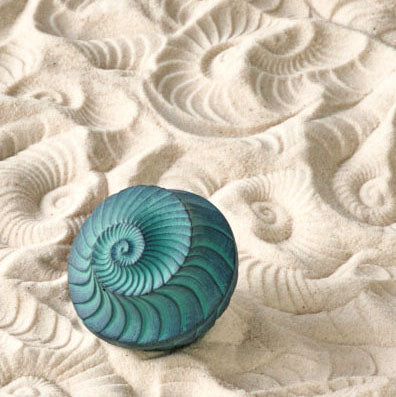
Wonks are…well…wonky. Intentionally carved out-of-round; these convex sculptures offer a more adventurous...
Portland, Oregon studio
The original home of Wonderscapes and concrete Sand Spheres, handmade in Portland since 2008.
Olander Earthworks is a Portland studio founded by sculptor Andrew Lonnquist, inventor of the original Wonderscape and Olander's concrete Sand Sphere. Andrew and Sarah Lonnquist now co-own and lead the small studio team, making tactile art objects that bring sculpture, pattern, motion, and open-ended play together.

What we make
Olander makes tactile art objects for rolling, pressing, tracing, smoothing, and beginning again. Each product brings a different combination of weight, texture, movement, and temporary pattern.

A Wonderscape combines a handcrafted wooden tray, fine crystalline sand, and sculptural concrete forms used to create and erase temporary patterns.
Sand Spheres, Wonks, and Cones give the hand a different movement and leave a different pattern in sand. Andrew created Olander's original concrete Sand Sphere in 2008.
Olander's sculptural objects bring texture, weight, and character to shelves, desks, gardens, and other personal spaces.
The people behind Olander
Andrew and Sarah co-own Olander Earthworks and lead its small Portland team. Andrew shapes the products and production methods. Sarah leads operations, partnerships, customer experience, and communication. Together they guide the studio and its original line of tactile art objects.

Founder / sculptor / inventor
Andrew founded Olander Earthworks in 2008 and created the original Wonderscape and Olander's concrete Sand Sphere. The idea began when one of his sculptures fell into sand and left an impression. Andrew developed that accident into a round, patterned form that creates a continuous mark as it rolls through sand.
As Olander's sculptor and designer, Andrew maps and hand-carves original patterns in softer materials. Those originals become molds for the studio's small-batch concrete forms. His work gives Olander its physical language: intricate surfaces, satisfying weight, repeated pattern, and forms made to move through sand by hand.

Co-owner / CEO
Sarah joined Olander in 2014, bringing an art background, a love of community-building, and an entrepreneurial spirit to the growing studio. She is now Olander's co-owner and CEO.
Sarah leads operations, partnerships, customer experience, and communication. She and Andrew have built the website, wholesale relationships, team, studio space, packaging, and public story around Olander's original work. They share responsibility for the company's direction and lead the Portland team together.

Made by hand in Portland, Oregon
Andrew begins with an original carved pattern. The studio uses those originals to make molds, cast concrete forms in small batches, and finish each form by hand. A local production partner cuts the wooden tray components, which Olander routes, sands, and finishes in the Portland studio.
Andrew maps and hand-carves each original pattern in softer materials.
The studio makes molds from Andrew's original sculptures for small-batch concrete casting.
Concrete forms are cast in small batches, then colored, finished, and inspected by hand.
Locally cut tray components are routed, sanded, and finished before trays, sand, and forms come together as a Wonderscape.
What guides the studio
These commitments shape what Olander designs, how the studio makes it, and the relationships behind each finished piece.
Olander develops its own sculptural patterns and product concepts, including the original Wonderscape and concrete Sand Sphere.
The studio casts concrete forms in small batches and finishes each form and wooden tray by hand.
Olander works with local production partners and builds long-term relationships with customers, retailers, artists, and its studio community.


Studio timeline
Milestones trace the studio's path from Andrew's first Sand Sphere to the Olander team and product line of today.
Olander grew through direct customer feedback, small-batch production, and the shared work of Andrew, Sarah, and their Portland team.
2008
After one of Andrew's sculptures leaves an unexpected impression in sand, he develops a round, patterned form that creates a continuous mark when a person rolls it. That original concrete Sand Sphere becomes the foundation for the Wonderscape.
2008
Early studio years
Andrew works weekends at Portland Saturday Market while building the sculpture studio. Customers meet the objects by rolling, pressing, and playing directly in sand.
Early studio years
2014 and beyond
Sarah joins Andrew in building the website, wholesale relationships, customer communication, studio space, team, and packaging around the original line of handmade work.
2014 and beyond
Today
Olander continues making the original Wonderscapes, concrete Sand Spheres, and related sculptural forms in Portland, bringing trays, fine sand, and forms together as a screen-free creative ritual.
Today
Seen, shared, and collected
Olander's press and media kit brings together approved founder bios, company facts, photography, media assets, and story angles for editors, partners, and collectors.
Continue exploring
About Olander Earthworks
Olander Earthworks is based in Portland, Oregon.
Andrew carves original patterns in softer materials. Olander uses those originals to make molds, casts concrete forms in small batches, and finishes them by hand. A local production partner cuts the wooden tray components; Olander routes, sands, and finishes them in the Portland studio.
Andrew Lonnquist invented the Wonderscape and Olander's concrete Sand Sphere at Olander Earthworks. He founded the studio in 2008 after an unexpected impression in sand inspired a round, patterned form that could be rolled to create a continuous mark. Sarah Lonnquist joined the business in 2014 and is now co-owner and CEO.
Wonderscapes are Olander's original interactive tabletop sand experiences, created by Andrew Lonnquist. Each combines a handcrafted tray, fine crystalline sand, and sculptural concrete forms that you roll, press, and use to create temporary patterns.