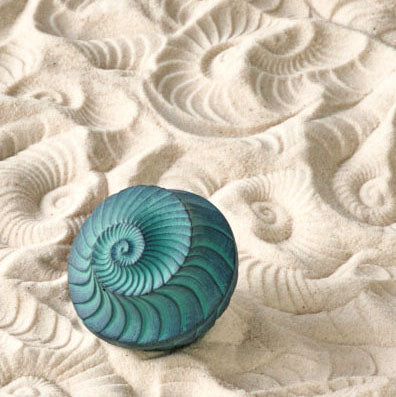
Made by hand in Portland, Oregon

How it's made: the handmade process behind our Wonderscapes

Olander Earthworks makes the original Wonderscapes and concrete Sand Spheres in a small Portland studio. From the first pattern carved into a master to the final sanding of a tray, every piece moves through deliberate stages shaped by material, practice, and human attention.

This is a look at the craft behind the work - not a recipe to copy, but the care that makes each object feel like Olander.

Shop Wonderscapes
Olander Earthworks studio process behind handmade concrete Sand Spheres

A handmade object has a history

Made for the hand, one careful stage at a time

Every Olander piece begins with original sculpture and ends as an invitation to use it. Andrew Lonnquist designs the forms, the studio works in small batches, and each finished object carries slight variations that come from the process itself.

We share the story because the material work matters. We keep the exact formulas, mold-making methods, and studio systems private so the original designs can remain the work of the people who made them.

Inside the studio

From original idea to a Wonderscape ready to use

The work is not an assembly line. It moves between carving, mold work, small-batch concrete casting, finishing, tray preparation, and thoughtful pairing. Each stage is handled with the same goal: make an object that feels good to pick up, roll, notice, and return to.

Hands carving an original Olander Sand Sphere pattern by hand

Original sculpture

The pattern starts with a hand-carved idea

Andrew begins each new Sand Sphere or form as a sculptural problem: how a surface will meet the sand, how a hand will hold it, and what kind of mark will emerge in motion. He maps and hand-carves original patterns in softer composite materials before they become studio molds. Some designs take many hours of drawing, carving, testing, and refining before they are ready for the next stage.

Explore Sand Pattern Forms  
Olander Earthworks small-batch concrete process in the Portland studio

Small-batch concrete

Forms are cast for weight, texture, and movement

Once an original design is ready, the studio uses its own molds to cast the concrete forms in small batches. Concrete gives a Sand Sphere its satisfying weight and lets the carved texture carry into the sand. The material is chosen for the way it feels, moves, and wears over time - not for factory-perfect sameness.

Shop Sand Spheres  
Andrew Lonnquist holding a finished Olander sand form in the Portland studio

Finished by hand

Each form is checked, finished, and given room for character

After casting, every form is handled again. The studio checks edges, surface, color, and the way the piece feels in the hand. Natural shifts in concrete, color, and finish mean no two pieces are exactly alike. Those small differences are part of the handmade character of the work, not a flaw to be engineered away.

See current forms  
Andrew and Sarah Lonnquist in the Olander Earthworks Portland studio

The wooden tray

Local woodwork meets hands-on studio finishing

A local CNC partner cuts the wooden tray components. Back at the studio, Olander routes, sands, and finishes each tray by hand. This lets the team pay close attention to the surface that will hold the sand, the proportion of the finished piece, and the small details that turn a tray into the foundation of a Wonderscape.

Explore Wonderscape trays  
A finished Olander Wonderscape with handmade tray, fine sand, and sculptural concrete forms

Ready for its next pattern

A Wonderscape comes together as an open-ended art object

Fine crystalline sand, a handmade tray, and a selection of original concrete forms come together as a Wonderscape. The studio prepares each set so the next part belongs to you: rolling, pressing, tracing, smoothing, and starting again. The finished object is complete when it is used, not when it leaves the studio.

Shop Wonderscapes  

Explore the work

See where the process comes together

Start with a complete sand garden, find an original form, or explore the trays that give a Wonderscape its surface.

Studio questions

Common questions about how Olander pieces are made

What makes each Sand Sphere and form unique?

Every pattern begins as an original Olander sculpture, then moves through small-batch casting and hand finishing. The carved design, concrete surface, color, and final finishing all carry slight variation, so no two pieces are completely identical.

Why does Olander use concrete?

Concrete gives the forms a satisfying weight and lets the carved texture make a clear, tactile impression in fine sand. It is part of the sculptural language Andrew developed for Olander: durable, substantial, and full of natural variation.

How long does it take to make a Sand Sphere?

There is not one production time. A new original pattern can take many hours to draw, carve, test, and refine before it becomes a mold. Each small batch then moves through casting, curing, finishing, and final inspection before it is ready for the shop.

Are the forms hand colored and finished?

Yes. The studio handles finishing and color work as part of the small-batch process. Because concrete and hand finishing naturally vary, the color and surface of your piece may carry small shifts that make it individual.

Where are Olander trays made?

A local CNC company cuts the wooden components, and Olander routes, sands, and finishes the trays in its Portland studio. That local partnership keeps the work connected to the studio while allowing the team to focus on the details that matter to the finished sand surface.