
Stress & Anxiety Relief Toys: What the Research Says Actually Works

A Review of Studies and Literature to Find Out What Really Makes a Difference, and What May Be More Gimmick Than Help
Stress balls, fidget toys, textured objects, putty, grounding stones: there is no shortage of products promising to give restless hands somewhere to go. The research behind them is considerably less tidy.
Studies involving adults and young adults have looked at everything from stress balls to broader sensory activities, with some encouraging results and plenty of limitations. So far, there isn't evidence pointing to one universally effective “anxiety toy.”
That makes the more useful question, when choosing what is right for you, less about finding the best product and more about how different types of sensory interaction actually work. What has research found about squeezing, touching, or fidgeting? Where might these tools be useful? And where do the claims get ahead of the evidence?
Tactile Sensory Tools Show Promise, With Some Important Limits

Touch gives us a direct way to interact with our surroundings. Sensory tools offer plenty of ways to explore it. You might squeeze a stress ball, work with putty, or let another material move through your fingers.
Before looking at individual tools, it helps to consider the broader relationship between sensory experiences and stress. The 2024 systematic review The Association Between Sensory Processing and Stress in the Adult Population examined 20 studies and found strong evidence of a relationship between differences in sensory processing and self-reported stress in adults.
Adults who were more sensitive to sensory input typically reported higher levels of stress. The review doesn't tell us a particular sensory tool will reduce stress, but it does give useful context for why sensory experiences are worth considering in the first place.
The 2023 scoping review Sensory Modulation Interventions for Adults With Mental Illness examined 17 studies including adults in mental health settings. Approaches included familiar tactile tools such as putty, squeeze objects and weighted items alongside movement-based activities such as rocking or yoga. The review discovered potential for reducing distress and regulating arousal through Sensory Modulation Interventions (SMIs, in other words: self directed sensory activities or changes to environment).
Research into individual tactile objects paints a similarly interesting picture. A 2026 study of Efficacy of Tactile Slime Toy: An Experimental Approach to Acute Stress Among College Students randomly assigned 30 first-year psychology students to use tactile slime or receive no stress-relief tool. Stress decreased significantly within the slime group. No significant change occurred in the control group.
However, researchers did not find a significant difference in post-intervention stress between the two groups. The researchers concluded that slime may have potential as a supplementary, low-cost option rather than something to rely on as a standalone intervention.
For someone considering slime, the takeaway is fairly practical: if you enjoy tactile activities, it could be a low-cost option to experiment with alongside other ways you manage stress.
Stress Balls Work in Some Settings and Not in Others

Stress balls have been studied more directly in adults, particularly during medical procedures. Those studies give us one of the clearest lessons in the research: context matters.
One study examined the interaction itself more closely. In Haptic Coordination: Squeezing a Vibrating Stress Ball Decreases Anxiety and Arousal, participants squeezed a stress ball that responded with vibration while viewing stressful images. Researchers found that squeezing the vibrating ball reduced anxiety and physiological arousal. The stability of the coordination between squeezing and vibration also affected arousal. This suggests the way someone interacts with a tactile object may be worth considering alongside the object itself.
Clinical research provides another perspective. In The Effect of Stress Ball on Anxiety and Pain Levels in Angiography, a randomized controlled trial involving 120 adults undergoing coronary angiography, patients using a stress ball reported lower anxiety and pain than those in the control group.
Taken together, these studies make context difficult to ignore. Stress-ball use has produced encouraging results in controlled situations, while the haptic study raises a different question: the interaction itself may matter, not simply whether someone has a stress ball in their hand.
Sitting through angiography is quite different from dealing with an overflowing inbox on Tuesday morning. Research in clinical settings can give us useful insight into tactile interaction during acute stress. It cannot automatically prove that the same object will reduce everyday anxiety.
Fidgeting May Serve a Different Purpose From Stress Relief

Fidget toys are frequently sold with a long list of promises around anxiety, attention and stress. Research involving adults with ADHD suggests those ideas need to be separated.
A 2024 study, A quantitative analysis of fidgeting in ADHD and its relation to performance and sustained attention on a cognitive task, tracked wrist and ankle movement in 70 adults with ADHD while they completed an attention task. Participants fidgeted more during correct trials, and those with more consistent reaction times fidgeted more during later parts of the task. Researchers concluded that fidgeting may act as a compensatory mechanism that helps adults with ADHD sustain attention.
That finding becomes particularly interesting beside the 2025 study Impact of fidget devices on anxiety and physiological responses in adults with ADHD. Adults with ADHD were randomly assigned to use a fidget ball or no fidget ball during a stressful task. Researchers discovered no significant differences between the groups in self-rated anxiety, heart rate, heart-rate variability, or natural fidgeting. In addition, they found preliminary evidence that using the fidget ball may alter the relationship between natural fidgeting and physiological self-regulation.
In other words, fidgeting and fidget toys are not necessarily interchangeable. Someone who naturally taps a foot or keeps their hands moving while concentrating may be doing something different from someone handed a gadget specifically to reduce anxiety. For adults with ADHD and therapists considering sensory tools, that's an important distinction: evidence about natural fidgeting shouldn't automatically be treated as evidence that a commercial fidget device will produce the same effect.
This doesn't mean a fidget can't be enjoyable or personally useful, but it does give shoppers a reason to be skeptical of products promising focus, calm, and stress relief in one neat package.
Grounding Objects Are About What You Do With Them

Grounding takes a different approach from asking a toy to reduce anxiety on its own. Sensory grounding directs attention toward what's happening in the present. That might mean concentrating on what you can feel or noticing other sensory details around you.
The “grounding object” itself doesn't have to be complicated. A smooth stone gives you its weight and texture to notice. Putty changes shape beneath the fingers. Sand offers another experience through its texture and movement.
This distinction matters because an ordinary pebble doesn't suddenly gain special properties when someone puts “grounding stone” on the packaging. The sensory experience comes from how the object is used. The texture, weight, or other sensory details give someone something concrete to focus on in the present moment.
For therapists, that opens up more possibilities than a shopping list of “therapeutic toys.” Different objects give someone different details to notice. A stone has weight and texture. Something squeezable adds resistance. Sand changes beneath the fingers as it moves. What matters is having sensory information the person can consciously pay attention to.
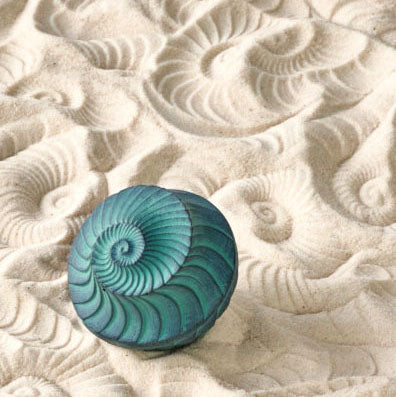
Multisensory objects offer another route by bringing different forms of interaction into one activity. A Wonderscape, for example, combines fine sand with rolling Sand Spheres that create patterns as they move across the surface. While it hasn't been studied as an anxiety treatment, and shouldn't be presented as one, it's one example of a creative object that gives your hands texture and movement to explore.
The Bigger Finding: There Probably Isn't One “Best” Anxiety Toy

Taken together, the research doesn't point to a single winner.
Research in adults has found a relationship between sensory processing and stress, while studies of sensory modulation have explored multiple forms of sensory input. Studies of stress balls vary according to the setting and population.
Research in adults with ADHD suggests natural movement deserves to be distinguished from using a fidget device. Even the college slime experiment showed improvement within the intervention group without demonstrating a significant post-test difference against the control group.
Olander Earthworks' 2026 Micro Reset Report adds another perspective. This was a survey of 104 licensed and allied health practitioners rather than a clinical trial, so its findings should be considered separately from the academic studies above. Among respondents, 83% agreed that tactile sensory activities help shift clients from cognitive overload toward physical awareness.
The same survey also found that practitioners rated physical movement, deep breathing and stepping outside as the three most effective micro-break methods tested. Tactile activities therefore sit within a much wider collection of strategies rather than replacing them.
That's particularly useful for anyone assembling a personal or clinical toolkit. The best option at one moment may be a tactile object. At another, getting out of the chair and walking outside might make more sense.
How to Choose a Stress or Anxiety Tool Based on the Research

Start with the experience rather than the claim on the box.
Think about the kind of interaction you naturally reach for. If squeezing or resistance appeals to you, a stress ball or firm putty gives you that type of interaction. If texture keeps your hands interested, smooth stone or sand offers something different.
For people who naturally fidget, consider the movement you already make before choosing a device. A quiet object that works with that movement may make more sense than picking whatever happens to have “ADHD” printed in the product description.
Grounding objects can be approached in much the same way. Look for sensory qualities you can consciously notice. Weight or texture may be what you notice most; someone else may prefer resistance or movement. Therapists may find it useful to have different choices available rather than assuming everyone will respond to the same input.
Where you plan to use the object deserves some thought as well. A noisy clicker may be perfectly enjoyable at home and deeply unpopular with the person sitting beside you at work. Something small can slip into a pocket for a college lecture or commute. A larger tactile or creative activity might be easier to enjoy at home or in a therapist's office.
Finally, notice what happens when you actually use it. Research gives us patterns across groups. Your hands are allowed an opinion, too.
What the Research Really Tells Us About Stress Relief Toys
The evidence doesn't support the idea that one category of stress or anxiety toys universally works. It gives us something more useful: clues about the types of sensory experiences worth exploring and the circumstances in which researchers have studied them.
Research on tactile tools has produced promising but varied results depending on the type of interaction, setting, and population. Natural fidgeting may also have a different role from using a manufactured fidget device, particularly for adults with ADHD. With grounding objects, sensory interaction is central to their use.
For adults and therapists, that leaves room to experiment thoughtfully. Think about what you're hoping to get from the interaction and where the object will actually be used. From there, you can explore the type of sensory input that feels right.
A stress ball might earn a permanent place on your desk. A stone might feel better in your hand. Sometimes the most useful option isn't a toy at all; it might be a walk outside.
The research doesn't give us a magic object. It gives us a much better way to choose one.
Images include editorial illustrations and Olander product photographs. They are not photographs of study participants.


